

Our take on seasoning
More Info
The cast iron and carbon steel fan base has a near infinite variety of opinions on seasoning. I am going to cut straight to it and provide you our take. I will not delve into molecular science, but you can find numerous articles online if you want the molecular tidbits. In this article, seasoning refers to the conversion of oil into a protective coating for your cookware. We are not addressing various flavors added to a recipe. English likes to repurpose words, so I want to clarify which seasoning we are referring. In our workshop, we apply grapeseed oil with an automotive style paint sprayer in a very thin coat. Then, we actually wipe off as much as we can, leaving a very thin layer on the skillet or waffle iron. The next step is to simply roll our production cart into a process oven and bake it at 450 for an hour after it reaches temperature. During this high heat process, the molecules break apart and reform as a semipermanent coating on the pan that does a couple of things. It protects the metal from rust by locking out moisture. It is also a hydrophobic coating, meaning it repels water. You will never get Teflon like performance from natural cookware, but we also do not get the high potential for negative side effects from it, either. There are some great documentaries available that discuss the tremendous health hazards of non-stick coatings, and Teflon is not the only one. Teflon is a phenomenal compound that serves well in industry, we just don’t want to serve it to our families.
Seasoning on cookware is sometimes referred to as a Patina. It ebbs and flows, comes and goes. If you cook an acidic food or deglaze your skillet with wine, your seasoning will change. We are not going to say “ruined” because seasoning changes over time. As cooks, it can be a trap to take pride in how our seasoning looks. I will admit, a skillet or waffle iron that is almost black with seasoning does look nice. But if your seasoning fades, it is quite easy to re-establish. The quickest way to re-season cookware is on your stove top. First, wash thoroughly with soap and hot water. (point of order, modern soaps are perfectly safe for cast iron and carbon steel. Rinse thoroughly and dry. Do not put your cast iron or carbon steel into a dishwasher. You can see a YouTube video on our channel going into more detail.) Heat your cookware on medium high heat. Once thoroughly heated, apply a few drops of your chosen cooking oil. For convenience at home, I use olive oil. Immediately wipe the oil all over the cook surface with a generous handful of paper towels. Use caution so that you do not touch the metal with your skin. The pan will begin to smoke. After a few minutes, the smoke will dissipate. Congratulations, you just applied one layer of seasoning. Seasoning is easy to touch up or restore as part of your after dinner clean up, if needed. On a regular basis I deglaze my skillet with a splash of white wine or water and make a pan sauce. The wine will affect your seasoning. I do not worry about that because when needed, touching up the seasoning takes single digit minutes to reapply while cleaning the kitchen after a meal. And remember, “Don’t sweat the small stuff. And it’s all small stuff.”
Related Posts
How to make your waffles STICK!!
How to Make Your Waffle Stick
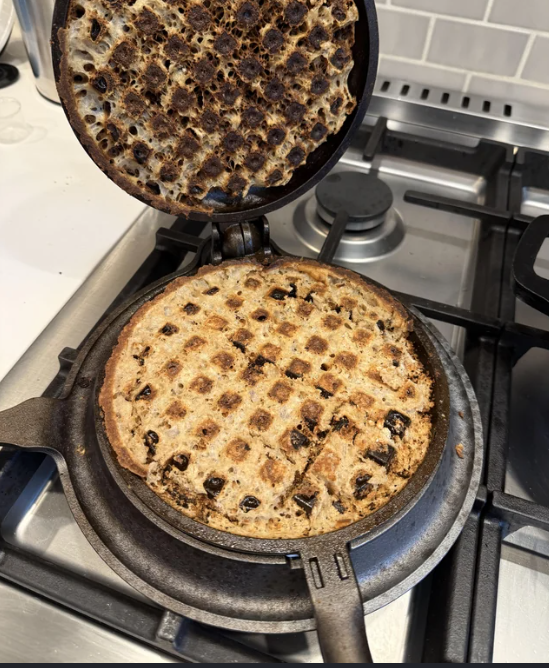
I completely understand that most of us do Not want our waffles to stick, but I want to approach this in a creative way, so here are the top ways to make your waffles stick.
1. Improperly heated waffle iron
2. Improper ingredients
3. Lack of cooking release
4. Checking for doneness too early
So now that I have laid out the general categories on how to make your waffle stick, let’s de-construct that a little bit so we can avoid SWS (Stuck Waffle Syndrom.)